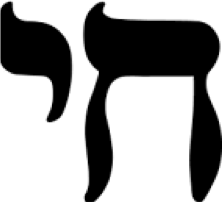
Chai
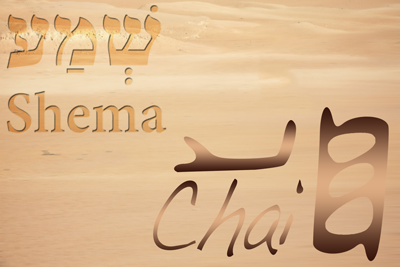
 Das Wort “Chai” im hebräischen bedeutet leben, aber wenn wir uns das Wort in der antiken Schreibweise anschauen, sehen wir, dass die Bedeutung viel tiefer geht.
In der antiken Schreibweise von Hebräisch sehen wir, dass jeder Buchstabe drei Werte hat: Er ist ein Bild, er hat einen Klang und einen numerischen Wert.
Im protosemitischen Alphabet besteht das Wort CHAI auch aus zwei Buchstaben, aber sie sahen anders aus als in der modernen Schreibweise. Der erste Buchstabe sah aus wie eine Leiter und der zweite wie ein Arm mit einer Hand.
Der Buchstabe, der wie eine Leiter aussieht, steht schief und hat auf der einen Seite unten und auf der anderen Seite oben eine Verlängerung.
In der Antike waren die Menschen Nomaden. Das bedeutet, dass sie in Zelten wohnten und auf der Suche nach Wasser und Nahrung für sich und ihre Herden umhergezogen sind. Die Zelte mussten stabil sein wegen der oft windigen Bedingungen. Sie hatten eine wunderbare Idee: Sie machten Rahmen aus Holz, die aussahen wie der antike Buchstabe Chet, und fügten sie aneinander. Die Rahmen steckten auf der einen Seite in einem Loch im Boden und das was aussieht wie die unterste Strebe einer Leiter ruhte dann fest auf dem Boden. Der nächste Rahmen steckte wiederum auf einer Seite im Boden und alle Rahmen sind aneinander befestigt worden. Erst wenn die Seitenwände der Zelte standen, haben sie Stoffplanen darüber gespannt, die genau über die Verlängerungen der Stäbe passten und dadurch waren die Zelte sehr stabil.
Der erste Buchstabe des Wortes ‚Chai‘ ist ‚CHET‘ und ist der achte Buchstabe im hebräischen Alphabet. Das Bild der Buchstabe zeigt uns, dass der Buchstabe ‘Grenzen der Wohnstätte‘ oder ‚Grenzen des Wohnraumes‘ bedeutet.
Der zweite Buchstabe ist ‘YOD’. Yod sah aus wie der Arm und die Hand eines Menschen. Yod ist der zehnte Buchstabe im hebräischen Alphabet und ist bekannt als männlicher Buchstabe, denn Yod spricht über die männliche Kapazitäten Gottes.
Das wichtigste Konzept im hebräischen Verständnis ist das Konzept ‚Schema‘. In 5. Mose 6,4-9 lesen wir: “Höre Israel, der HERR ist unser Gott, der HERR allein! Und du sollst den HERRN, deinen Gott, lieben mit deinem ganzen Herzen und mit deiner ganzen Seele und mit deiner ganzen Kraft.“
Als Yeshua nach dem ersten oder größten oder wichtigsten Gebot (je nach Übersetzung) gefragt wurde, lautete Seine Antwort nicht: „Du sollst den Herrn, deinen Gott, lieben“. Nein, das ist nur die halbe Antwort! Was Er wirklich sagte (Lukas 12,28-31) war, dass das größte Gebot folgendes ist: „Das erste Gebot unter allen ist: »Höre, Israel, der Herr, unser Gott, ist Herr allein; und du sollst den Herrn, deinen Gott, lieben mit deinem ganzen Herzen und mit deiner ganzen Seele und mit deinem ganzen Denken und mit deiner ganzen Kraft!« Dies ist das erste Gebot. Und das zweite ist [ihm] vergleichbar, nämlich dies: »Du sollst deinen Nächsten lieben wie dich selbst!« Größer als dieses ist kein anderes Gebot.“ Wir lesen dort: „Schema Israel… UND (das Wort ‘und’ ist das griechische Wort ‘kai’ und das Wort ‚kai‘ steht im Ursprungstext) du sollst den Herrn, deinen Gott, lieben… Was sagt Er uns? Er gibt uns die Antwort auf die Frage: Wie sollst du Gott lieben? Dadurch, dass du hörst und tust; dadurch, dass du Schema anwendest.
Das Wort ‘Chai’ bedeutet daher, dass ich die natürlichen Grenzen meines Wohnraumes überschreiten kann, wenn ich höre, was Gott mir sagt und es auch tue – wenn ich Gott gehorche. Wir können die natürlichen Einschränkungen unseres Wohnraumes überqueren, indem wir hören und tun, und wenn wir gehorsam sind, werden wir Gottes LEBEN erleben können. Wir werden dann nicht mehr daran gebunden sein, die Ressourcen zu benutzen, die uns im natürlichen Raum zur Verfügung stehen und werden auch nicht mehr an die Naturgesetze, die von Gott eingeführt worden sind, gebunden sein. Nein! Wir werden dann in der Lage sein, in die unbegrenzten Ressourcen Gottes hinein zu tappen und werden Zeichen und Wunder sehen, die über alles hinausragen, was die Erde je gesehen hat – WENN WIR HÖREN UND TUN.